I have always been a collector. As a child, it was postage stamps and those glossy “Got Milk?” magazine ads clipped from the pages of People. Back then, gathering was about completion—having the set, filling the pages.
But over time, the nature of the gathering shifted. It stopped being about a hobby and became a physical map of grief, love, and quiet connection.
Signs
When my brother passed away in November 2020, my relationship with the spaces around me changed. Soon after, I began noticing feathers in unexpected places. I started photographing them, holding onto them as a quiet, visual shorthand for his memory—a little way of saying hello.
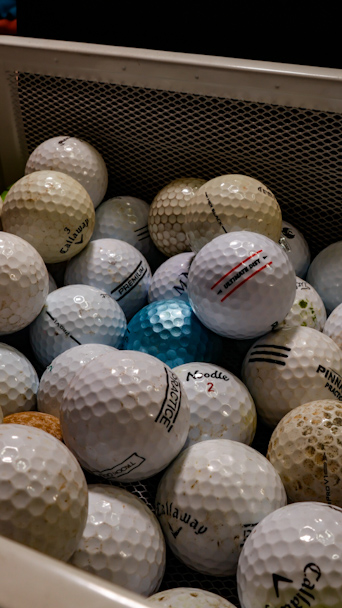
The feathers aren’t alone. If you look around my living space, you’ll find a basket overflowing with golf balls. Every time I spot one out in the world, I feel a nod from my grandpa, so into the basket it goes. There are trays of desert rocks, jars of shells, and brittle bundles of dried botanicals.
But lately, as I pack my bags and prepare for a road trip back to Michigan to visit my grandma, I’ve been looking at the sheer volume of things that have accumulated in our space over the last year.
Looking at a tray of beautiful stones, a sudden realization hit me: I have no idea where or when I found some of these.
Without the context of the day, the light, or the specific dirt I was standing on when I picked them up, they lose their anchor. They risk becoming just “stuff” that I am storing, rather than pieces of a lived experience.
Presence, Intention, and the Double-Check
I am keeping the golf balls, the stones, the dried botanicals. They stay. They ground me to this space. But as I head onto the open highway toward Michigan, I am setting a new intention for how I interact with the world I gather.
It isn’t about forbidding myself from bringing pieces of nature home. I am a tactile person; I like the weight of a stone in my palm. Instead, it is about anchoring the act of gathering in absolute presence.
Inspired significantly by Mary Jo Hoffman’s Still, I want to weave the rhythm of my daily life into a cohesive artistic expression using photography as my primary medium. Moving forward, if an object calls to me, it requires a conscious creative task before it crosses my threshold:
Metadata Registry
• Date & Time: Captured
• Location: The dirt, sand, or pavement where it rested
• The Image: Photographed either on location or brought home to be shot indoors
• The Ledger: A brief, shorthand journal entry recording the context
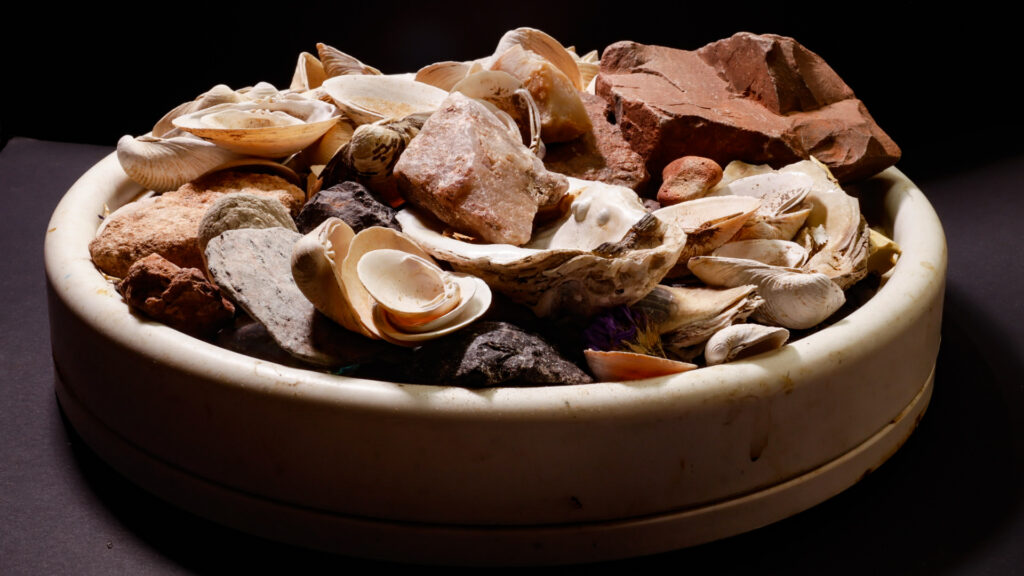
Deciding where to capture that image has become part of the discipline. Photographing these objects out in the wild, on location, is highly encouraged—mostly because bringing them indoors introduces a whole separate physical toll. Trying to shoot macro-style botanicals or textured stones inside without blasting them with artificial light means relying heavily on a tripod.
And let’s be honest: dragging around, setting up, and micro-adjusting a heavy, stubborn tripod when navigating hypermobile Ehlers-Danlos Syndrome (hEDS) is a sport in itself. My joints don’t always love the physical mechanics of working in a studio. If the thought of wrestling that heavy gear inside doesn’t make me pause and think twice about bringing a rock home, nothing will.
The Second Glance
This ritual serves a dual purpose.
First, it forces a pause. By attaching a conscious, creative task—and a real physical consequence—to the act of picking something up, I have to be fully present. The requirement of the photograph and the journal entry naturally filters out the mindless clutter.
Second, it explores the emotional architecture of a collection. It asks: Am I collecting just to collect, or are there reasons, purposes, emotions, and sentiments behind what I’m bringing inside?
If an object carries a true echo of a moment, a place, or a person, it deserves the dignity of context. It deserves to have its story recorded.
My camera is packed. My notebook is open. The gathering starts with the light through the windshield, the rest stops, the miles of desert, mountains, plaines, and green between here and there. By the time I reach my grandmother’s driveway, I hope to already be practicing the kind of seeing that doesn’t just collect objects, but collects moments.