When we think of wildlife photography, our minds often jump to remote, untouched wildernesses. We picture intrepid photographers hiking for days into deep forests or waiting for hours in camouflage blinds just to capture a single, perfect shot of a rare bird species. It’s a romantic notion, and it produces incredible imagery of nature in its purest form.
But as a photographer based in the Phoenix Valley, my experience with wildlife has looked a little different. My recent work, including my project Egrets of El Dorado, focuses on the surprising, resilient urban birdlife right here in our local parks, canals, and golf courses. You don’t always need to travel to an isolated, pristine wetland to find compelling subjects; sometimes, you just need to walk down to the neighborhood pond with your camera.
There is a unique charm to urban birding. Watching a Great Egret patiently stalk its prey while golfers play, joggers and cyclists pass by on a paved trail creates a fascinating juxtaposition between nature and human development. It challenges me as a photographer to compose shots that either isolate the bird in a fleeting moment of natural grace or intentionally include the urban environment to tell a story of adaptation.
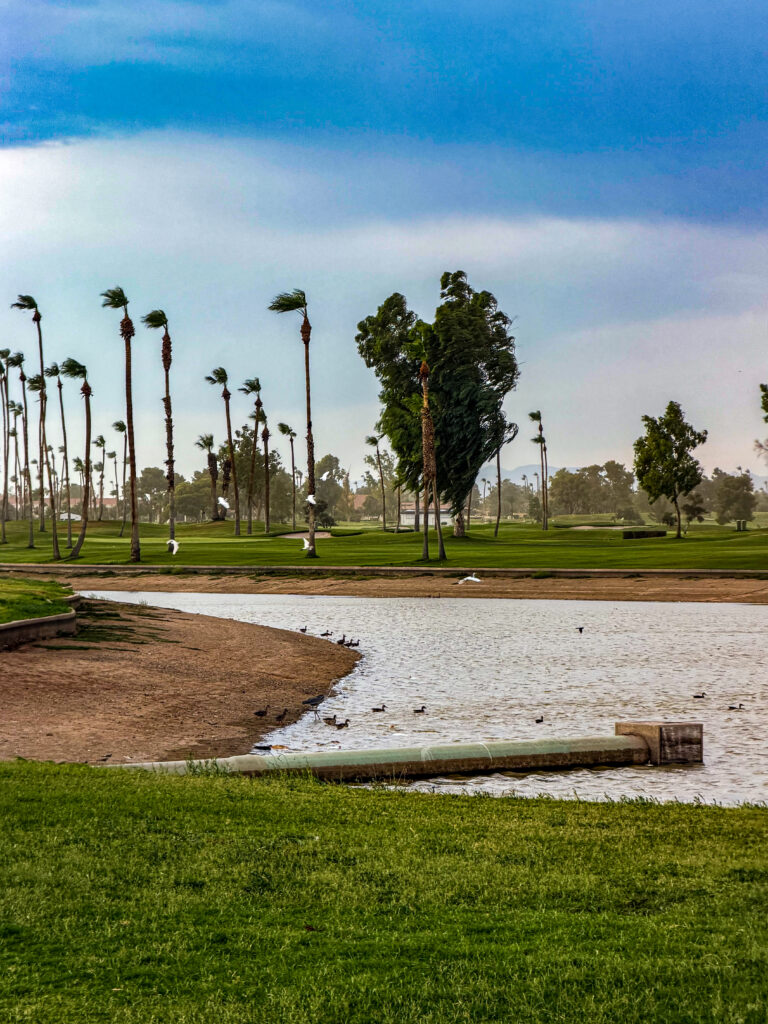
For this post, I wanted to explore that contrast visually. Below is one of my own photographs of local egrets, captured in a Scottsdale urban oasis.
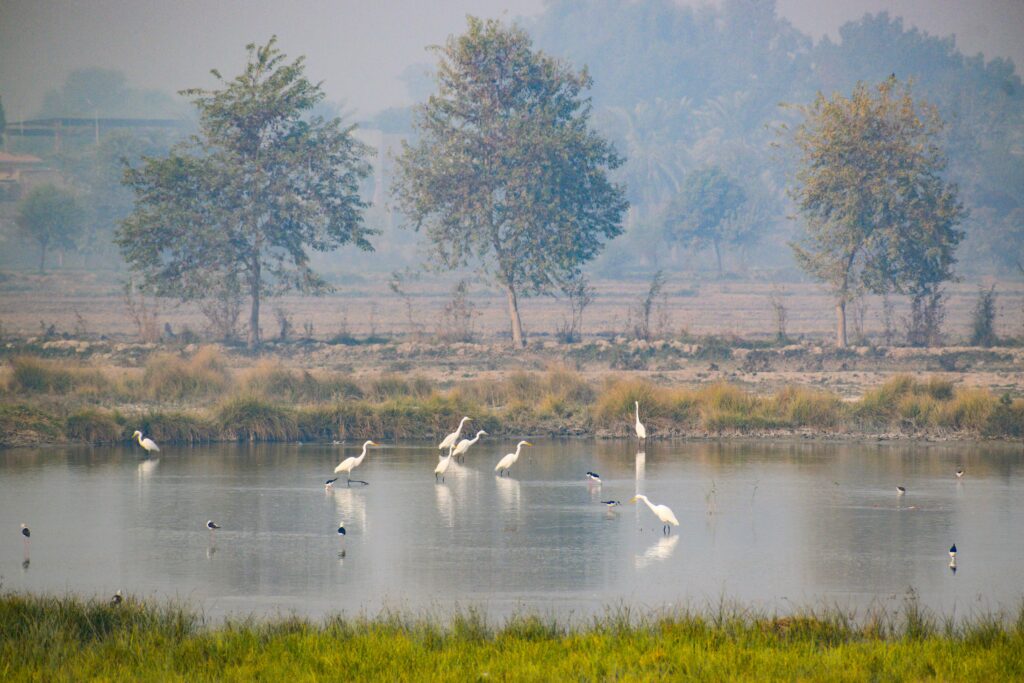
To contrast this, I’ve included a stock image of a more traditional, remote wetland bird habitat—the kind of untouched environment we typically associate with these majestic birds when we think of traditional wildlife photography.
Finally, I used an AI image generator to create a rough equivalent of that same remote wilderness scene. It’s fascinating to see how artificial intelligence interprets the “idealized” natural habitat compared to the real, often messy, urban habitats our local birds actually navigate every day.
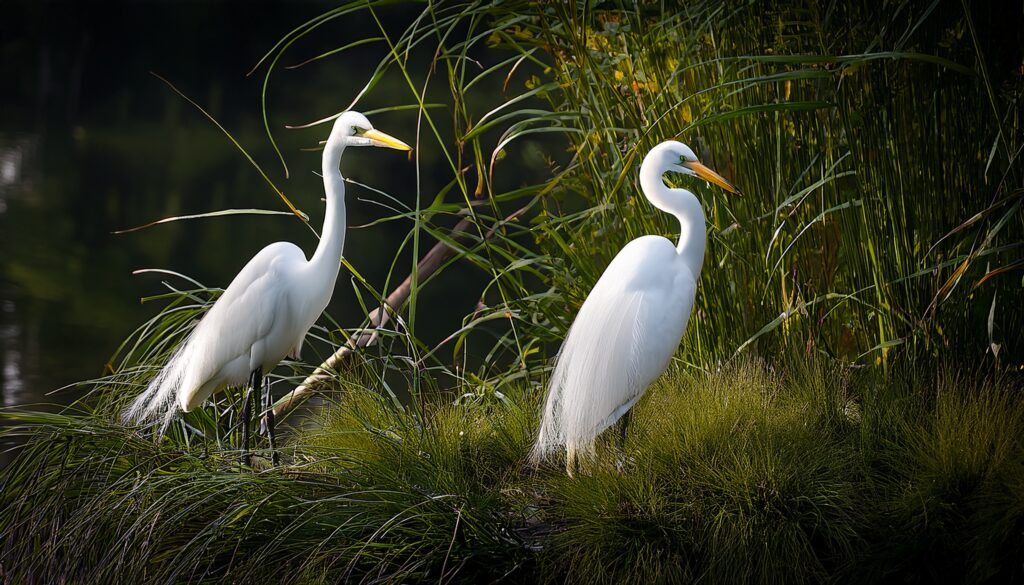
Looking at these three images side-by-side raises an important question about authenticity in visual storytelling. The stock photo is a beautiful capture of someone else’s memory, and the AI image is a technically impressive, instantaneous fabrication. Both present a romanticized ideal.
But neither of them can replace the value of the lived experience. My photograph is the result of physically standing near the Indian Bend Wash, feeling the heavy, humid winds of an approaching summer storm, and waiting for the exact moment the egrets took to the sky. It is a genuine, tangible record of a specific moment in our local ecosystem. As technology makes it easier to generate pristine, artificial worlds, the messy, beautiful reality of observing the wildlife right in our own neighborhoods becomes all the more valuable.